2026 Scholarship Recipients
Arizona Artists Guild Visual Arts Scholarship Program is in partnership with Arizona Watercolor Association and Arizona Clay Association. Scroll down to learn about the 2026 scholarship recipients.
Sydney Norton | AAG Marigold Linton Scholarship for Sculpture
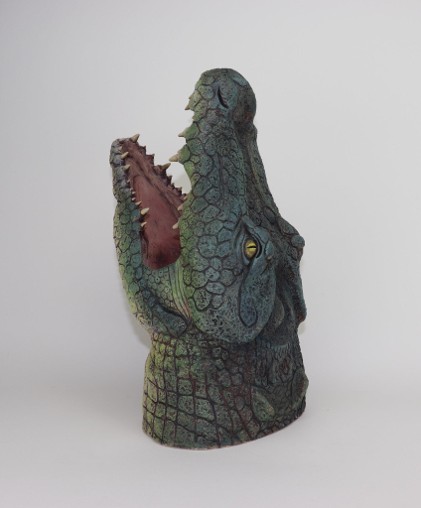
Sydney Norton
AlligatorStoneware, Inks
10 x 9 x 12
1,000
2025
As an artist, my aim is to create accurate and detailed sculptures of animals that inspire deeper appreciation for the natural world. I have been creating art all my life, mainly through painting, though I’ve continued my education in ceramics and sculpting. My background in painting and illustration allows me to translate sketches and concepts into three dimensional forms with strong attention to detail and structure.
I am drawn to ceramics because of the processes each piece undergoes. I enjoy incorporating a variety of finishes through inks, glazes, and atmospheric firings. These processes give me the opportunity to explore surface, texture, and form in ways that enhance each sculpture.
My inspiration comes from the vast diversity of birds, mammals, sea creatures, reptiles, and insects. Each species varies in their unique characteristics that present both creative and technical challenges when working in clay. Through sculpting animals, I am also able to explore deeper human issues while indirectly addressing subjects that may be difficult to confront directly. Through story telling and examining relationships between animals, my work can also begin to reflect human behavior and investigate interpersonal relationships.
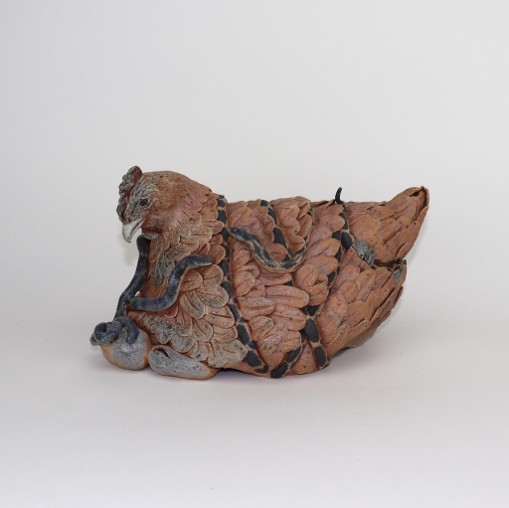
Sydney Norton
Momma Hen
Stoneware, Porcelain slip, Underglazes
7.5 x 10 x 7
$500
2025
click for more information
Sydney Norton
Momma HenStoneware, Porcelain slip, Underglazes
7.5 x 10 x 7
500
2025
As an artist, my aim is to create accurate and detailed sculptures of animals that inspire deeper appreciation for the natural world. I have been creating art all my life, mainly through painting, though I’ve continued my education in ceramics and sculpting. My background in painting and illustration allows me to translate sketches and concepts into three dimensional forms with strong attention to detail and structure.
I am drawn to ceramics because of the processes each piece undergoes. I enjoy incorporating a variety of finishes through inks, glazes, and atmospheric firings. These processes give me the opportunity to explore surface, texture, and form in ways that enhance each sculpture.
My inspiration comes from the vast diversity of birds, mammals, sea creatures, reptiles, and insects. Each species varies in their unique characteristics that present both creative and technical challenges when working in clay. Through sculpting animals, I am also able to explore deeper human issues while indirectly addressing subjects that may be difficult to confront directly. Through story telling and examining relationships between animals, my work can also begin to reflect human behavior and investigate interpersonal relationships.
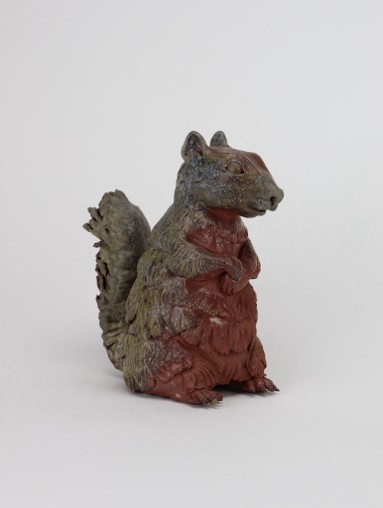
Sydney Norton
ContemplationStoneware
3.5 x 4 x 5.5
200
2025
As an artist, my aim is to create accurate and detailed sculptures of animals that inspire deeper appreciation for the natural world. I have been creating art all my life, mainly through painting, though I’ve continued my education in ceramics and sculpting. My background in painting and illustration allows me to translate sketches and concepts into three dimensional forms with strong attention to detail and structure.
I am drawn to ceramics because of the processes each piece undergoes. I enjoy incorporating a variety of finishes through inks, glazes, and atmospheric firings. These processes give me the opportunity to explore surface, texture, and form in ways that enhance each sculpture.
My inspiration comes from the vast diversity of birds, mammals, sea creatures, reptiles, and insects. Each species varies in their unique characteristics that present both creative and technical challenges when working in clay. Through sculpting animals, I am also able to explore deeper human issues while indirectly addressing subjects that may be difficult to confront directly. Through story telling and examining relationships between animals, my work can also begin to reflect human behavior and investigate interpersonal relationships.
Rafaela Dittrich Guebert | AAG Ruth Magadini Scholarship
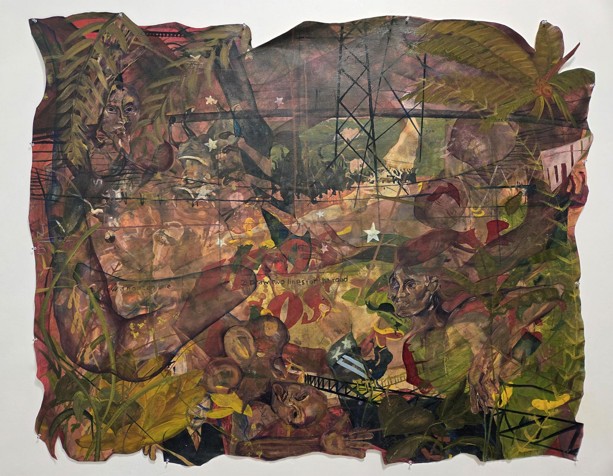
Rafaela Dittrich Guebert
Transamazonica
Oil on Canvas
50 x 65 x 1
nfs
2025
click for more information
Rafaela Dittrich Guebert
TransamazonicaOil on Canvas
50 x 65 x 1
nfs
2025
I was born at the border of the millennium, in a rural town in the south of Brazil. Named after the river that separates the territory – dividing space into here and there – Rio Negro is located in a region marked by latifundia oriented toward exportation. I was planted and grew up in a territory of conflict, the result of an immigration policy founded on physical, machinic, and symbolic violence exercised upon the bodies and the land.
At the history classes, school presented a narrative that seemed to be settled: the history of repression that shaped my parents’ childhoods. A past which has been closed without ever having truly ended, and which at my childhood began to reveal itself as an increasingly present past. The same forces that enabled the 1964 coup echoed to dispute our collective memory through a media-driven, digital effort to reimagine the present and rebuild its history. These movements destabilized the fragile period of redemocratization into which I was born, as well as the bubble of stability, growth, and peace in a country that never found its disappeared nor held its dictators accountable. A fragile memory, marked by the refusal to speak about what has already been.
With a BA in Visual Arts from the Federal University of Paraná, I researched art history and new media, developing a transdisciplinary studio practice that brings together photography, printmaking, painting, archival research and digital manipulation through a collage-based methodology. My practice investigates the interconnections between body, land, and machines through a posthumanist lens, understanding the image as a site of friction between temporalities, materials, and narratives.
Currently pursuing an MFA at the University of Arizona, in the US-Mexico borderlands, I investigate the concept of collective memory within the post-dictatorship generation in Brazil, reworking traces and absences related to the fragile relationship between the United States and South America. By accumulating layers of history, my work complicates the projected image of Brazil as an idyllic garden, displacing dichotomies that attempt to separate natural and artificial, primitive and developed, South and North, past and future.
The superimposition of these layers, within a rhizomatic process, creates a palimpsest that proposes strategies for assembling an ongoing past. Through this body of work and my role as an educator, my aim is to contribute to the articulation, reflection, and discussion of our collective visual-memory, foregrounding how these narratives are constantly disputed, contested and rebuilt.
To assemble an uncertain history implies moving through discontinuities, mutations, transparencies, and opacities, strategies of merging, that allow us to understand the actions of the present and imagine possible futures.
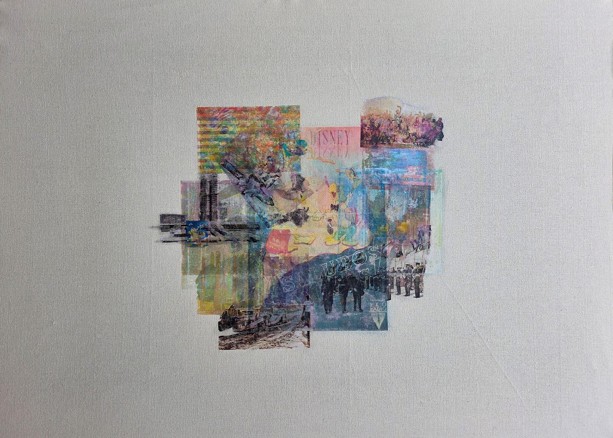
Rafaela Dittrich Guebert
Mais que amigos: friends!
Acrylic image transfer
36 x 48 x 1
$2500
2026
click for more information
Rafaela Dittrich Guebert
Mais que amigos: friends!Acrylic image transfer
36 x 48 x 1
2500
2026
I was born at the border of the millennium, in a rural town in the south of Brazil. Named after the river that separates the territory – dividing space into here and there – Rio Negro is located in a region marked by latifundia oriented toward exportation. I was planted and grew up in a territory of conflict, the result of an immigration policy founded on physical, machinic, and symbolic violence exercised upon the bodies and the land.
At the history classes, school presented a narrative that seemed to be settled: the history of repression that shaped my parents’ childhoods. A past which has been closed without ever having truly ended, and which at my childhood began to reveal itself as an increasingly present past. The same forces that enabled the 1964 coup echoed to dispute our collective memory through a media-driven, digital effort to reimagine the present and rebuild its history. These movements destabilized the fragile period of redemocratization into which I was born, as well as the bubble of stability, growth, and peace in a country that never found its disappeared nor held its dictators accountable. A fragile memory, marked by the refusal to speak about what has already been.
With a BA in Visual Arts from the Federal University of Paraná, I researched art history and new media, developing a transdisciplinary studio practice that brings together photography, printmaking, painting, archival research and digital manipulation through a collage-based methodology. My practice investigates the interconnections between body, land, and machines through a posthumanist lens, understanding the image as a site of friction between temporalities, materials, and narratives.
Currently pursuing an MFA at the University of Arizona, in the US-Mexico borderlands, I investigate the concept of collective memory within the post-dictatorship generation in Brazil, reworking traces and absences related to the fragile relationship between the United States and South America. By accumulating layers of history, my work complicates the projected image of Brazil as an idyllic garden, displacing dichotomies that attempt to separate natural and artificial, primitive and developed, South and North, past and future.
The superimposition of these layers, within a rhizomatic process, creates a palimpsest that proposes strategies for assembling an ongoing past. Through this body of work and my role as an educator, my aim is to contribute to the articulation, reflection, and discussion of our collective visual-memory, foregrounding how these narratives are constantly disputed, contested and rebuilt.
To assemble an uncertain history implies moving through discontinuities, mutations, transparencies, and opacities, strategies of merging, that allow us to understand the actions of the present and imagine possible futures.
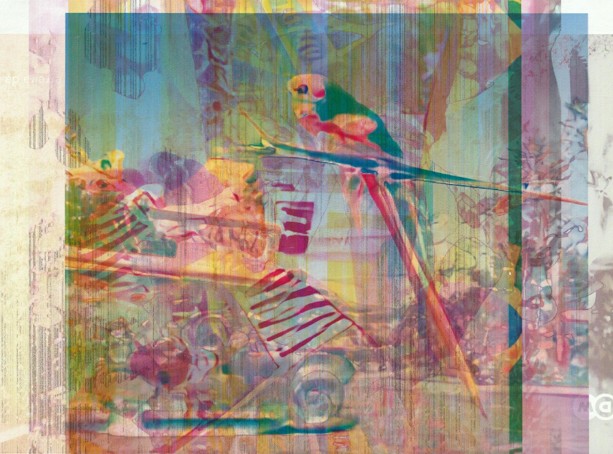
Rafaela Dittrich Guebert
Pau de Arara
Inkjet print; malfunctioning printer
8.27 x 11.69 x 1
$450
2025
click for more information
Rafaela Dittrich Guebert
Pau de AraraInkjet print; malfunctioning printer
8.27 x 11.69 x 1
450
2025
I was born at the border of the millennium, in a rural town in the south of Brazil. Named after the river that separates the territory – dividing space into here and there – Rio Negro is located in a region marked by latifundia oriented toward exportation. I was planted and grew up in a territory of conflict, the result of an immigration policy founded on physical, machinic, and symbolic violence exercised upon the bodies and the land.
At the history classes, school presented a narrative that seemed to be settled: the history of repression that shaped my parents’ childhoods. A past which has been closed without ever having truly ended, and which at my childhood began to reveal itself as an increasingly present past. The same forces that enabled the 1964 coup echoed to dispute our collective memory through a media-driven, digital effort to reimagine the present and rebuild its history. These movements destabilized the fragile period of redemocratization into which I was born, as well as the bubble of stability, growth, and peace in a country that never found its disappeared nor held its dictators accountable. A fragile memory, marked by the refusal to speak about what has already been.
With a BA in Visual Arts from the Federal University of Paraná, I researched art history and new media, developing a transdisciplinary studio practice that brings together photography, printmaking, painting, archival research and digital manipulation through a collage-based methodology. My practice investigates the interconnections between body, land, and machines through a posthumanist lens, understanding the image as a site of friction between temporalities, materials, and narratives.
Currently pursuing an MFA at the University of Arizona, in the US-Mexico borderlands, I investigate the concept of collective memory within the post-dictatorship generation in Brazil, reworking traces and absences related to the fragile relationship between the United States and South America. By accumulating layers of history, my work complicates the projected image of Brazil as an idyllic garden, displacing dichotomies that attempt to separate natural and artificial, primitive and developed, South and North, past and future.
The superimposition of these layers, within a rhizomatic process, creates a palimpsest that proposes strategies for assembling an ongoing past. Through this body of work and my role as an educator, my aim is to contribute to the articulation, reflection, and discussion of our collective visual-memory, foregrounding how these narratives are constantly disputed, contested and rebuilt.
To assemble an uncertain history implies moving through discontinuities, mutations, transparencies, and opacities, strategies of merging, that allow us to understand the actions of the present and imagine possible futures.
Lily Regalia | AAG/Arizona Watercolor Assoc Robert Oliver Arizona Architecture Foundation Scholarship
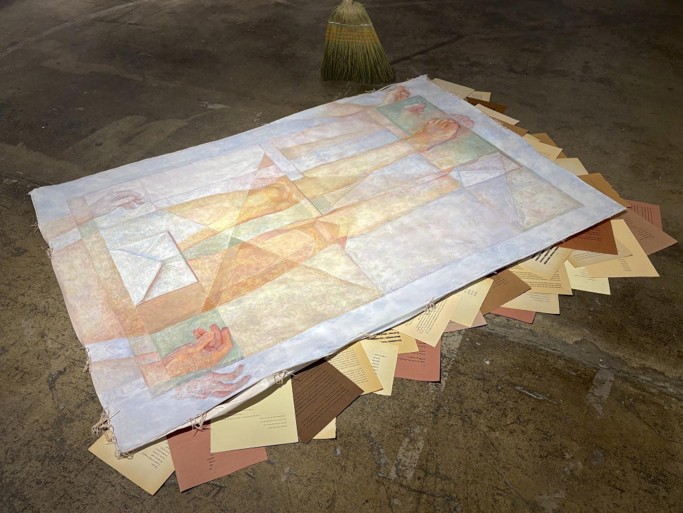
Lily Regalia
The Half-Life of Shame
Acrylic on canvas, felt,
embroidery thread, paper
72 x 48 x .5
NFS
2026
click for more information
Lily Regalia
The Half-Life of ShameAcrylic on canvas, felt,
embroidery thread, paper
72 x 48 x .5
NFS
2026
My work explores how the process of building and spaces within the home parallel human connection and identity. Having grown up in a family that renovates houses, there is a continued fascination with observing their interiors and how the people within intertwine. In turn, I imbue domestic structures with human appendages, and I use the stages of construction to represent psychological states. Demolition is a metaphor for trauma within the home, while rebuilding mirrors healing. For example, nailed boards simulate being held down and restricted, while stripping a house down to its studs mirrors the reconstruction of emotional foundations. The arrangement of various fixtures and furnishings within my compositions also adheres to my psyche. Furniture is a symbol for comfort while living in the discomfort of uncertainty.
Domestic spaces become a representation of the body and soul—internal spaces where personal growth and transformation occur. Transformation stems from the impermanence of a rehabbing lifestyle, and the resulting restlessness manifests as movement or disjointed figures in my work. My intimate interiors have a quiet energy, containing quick and loose mark-making. This is juxtaposed by patterns of under-rendered forms, such as staggered limbs, emphasizing the lack of stagnancy. Even in my process, I balance drawing with grounding lines and painting with chaotic brushstrokes. Each aspect of my work focuses on the difficulty of finding home and emotional stability in often interminable and incomplete
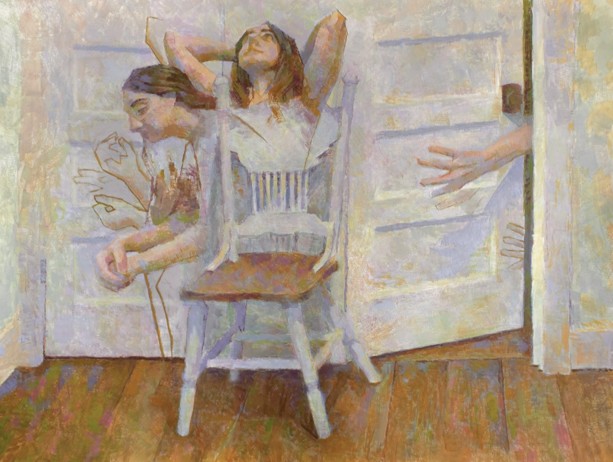
Lily Regalia
The Waiting RoomsAcrylic on paper
19 x 24
1350
2025
My work explores how the process of building and spaces within the home parallel human connection and identity. Having grown up in a family that renovates houses, there is a continued fascination with observing their interiors and how the people within intertwine. In turn, I imbue domestic structures with human appendages, and I use the stages of construction to represent psychological states. Demolition is a metaphor for trauma within the home, while rebuilding mirrors healing. For example, nailed boards simulate being held down and restricted, while stripping a house down to its studs mirrors the reconstruction of emotional foundations. The arrangement of various fixtures and furnishings within my compositions also adheres to my psyche. Furniture is a symbol for comfort while living in the discomfort of uncertainty.
Domestic spaces become a representation of the body and soul—internal spaces where personal growth and transformation occur. Transformation stems from the impermanence of a rehabbing lifestyle, and the resulting restlessness manifests as movement or disjointed figures in my work. My intimate interiors have a quiet energy, containing quick and loose mark-making. This is juxtaposed by patterns of under-rendered forms, such as staggered limbs, emphasizing the lack of stagnancy. Even in my process, I balance drawing with grounding lines and painting with chaotic brushstrokes. Each aspect of my work focuses on the difficulty of finding home and emotional stability in often interminable and incomplete
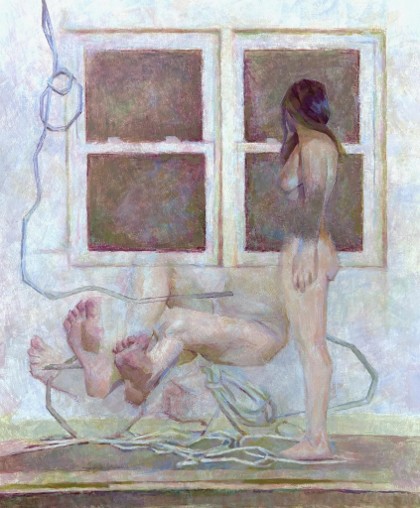
Lily Regalia
Tethered to the WombAcrylic on paper
18 x 15
950
2025
My work explores how the process of building and spaces within the home parallel human connection and identity. Having grown up in a family that renovates houses, there is a continued fascination with observing their interiors and how the people within intertwine. In turn, I imbue domestic structures with human appendages, and I use the stages of construction to represent psychological states. Demolition is a metaphor for trauma within the home, while rebuilding mirrors healing. For example, nailed boards simulate being held down and restricted, while stripping a house down to its studs mirrors the reconstruction of emotional foundations. The arrangement of various fixtures and furnishings within my compositions also adheres to my psyche. Furniture is a symbol for comfort while living in the discomfort of uncertainty.
Domestic spaces become a representation of the body and soul—internal spaces where personal growth and transformation occur. Transformation stems from the impermanence of a rehabbing lifestyle, and the resulting restlessness manifests as movement or disjointed figures in my work. My intimate interiors have a quiet energy, containing quick and loose mark-making. This is juxtaposed by patterns of under-rendered forms, such as staggered limbs, emphasizing the lack of stagnancy. Even in my process, I balance drawing with grounding lines and painting with chaotic brushstrokes. Each aspect of my work focuses on the difficulty of finding home and emotional stability in often interminable and incomplete
Ryan Greene | AAG Erin O’Dell Scholarship
Ryan Greene
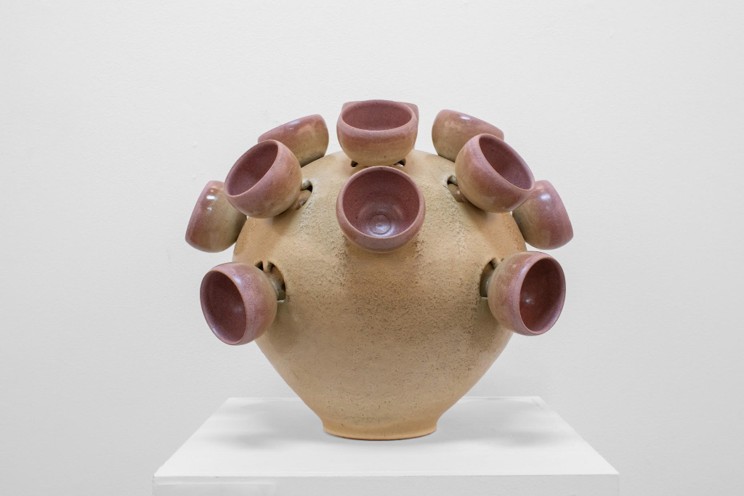
Cup Brush
with removable cups
Stoneware, Glaze
18 x 18 x 16
$1400
2025
click for more information
Ryan Greene
Cup Brushwith removable cups
Stoneware, Glaze
18 x 18 x 16
1400
2025
My work is rooted in the craftful uses of clay and the importance of utilitarian objects throughout history. I contemplate the interdependent nature of existing in this world and create pieces which connect to each other. This requires one to slow down as they unlock a lid, unstack a bowl, or twist a cup out of its holding place. These physical interactions drive my process with a focus on how the pieces function. A large part of my practice consists of formulating recipes and mixing dry materials to make clay bodies and glazes. I utilize wheel throwing, coil building, and slip casting techniques to create organic forms and multiples. I encourage people to interact with my work to connect with the pots, fill them with food and drink, and share moments together.
I am inspired by the Arts and Crafts Movement and intrigued with the duality of pottery to live a life of daily use or act as an element of design. Particularly, I question how ceramic objects made with a utilitarian purpose can blend in with decorative objects. I find similarities in how plants have many purposes beyond visual appeal, yet a highly manicured landscape can become quite sculptural. I connect functional pottery with fruiting and flowering plants to promoteS new ways of designing the landscapes around us. My work invites curiosity and physical interaction by offering surprises to those who dive deeper, and I encourage participants to carry this curiosity with them.
Ryan Greene
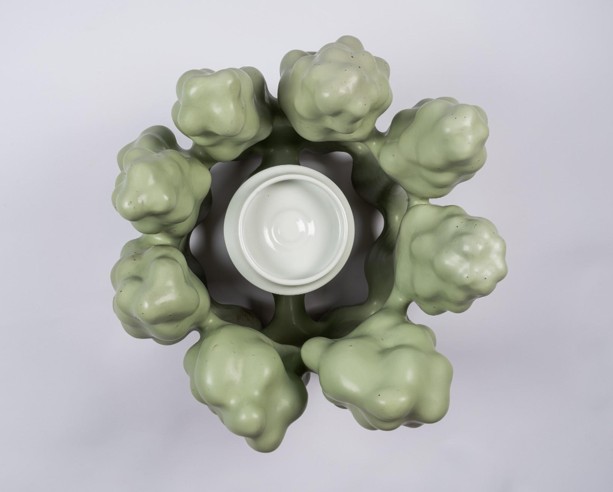
Serving BowlsStoneware, Porcelain, Glaze
20 x 20 x 20
3000
2024
My work is rooted in the craftful uses of clay and the importance of utilitarian objects throughout history. I contemplate the interdependent nature of existing in this world and create pieces which connect to each other. This requires one to slow down as they unlock a lid, unstack a bowl, or twist a cup out of its holding place. These physical interactions drive my process with a focus on how the pieces function. A large part of my practice consists of formulating recipes and mixing dry materials to make clay bodies and glazes. I utilize wheel throwing, coil building, and slip casting techniques to create organic forms and multiples. I encourage people to interact with my work to connect with the pots, fill them with food and drink, and share moments together.
I am inspired by the Arts and Crafts Movement and intrigued with the duality of pottery to live a life of daily use or act as an element of design. Particularly, I question how ceramic objects made with a utilitarian purpose can blend in with decorative objects. I find similarities in how plants have many purposes beyond visual appeal, yet a highly manicured landscape can become quite sculptural. I connect functional pottery with fruiting and flowering plants to promoteS new ways of designing the landscapes around us. My work invites curiosity and physical interaction by offering surprises to those who dive deeper, and I encourage participants to carry this curiosity with them.
Ryan Greene
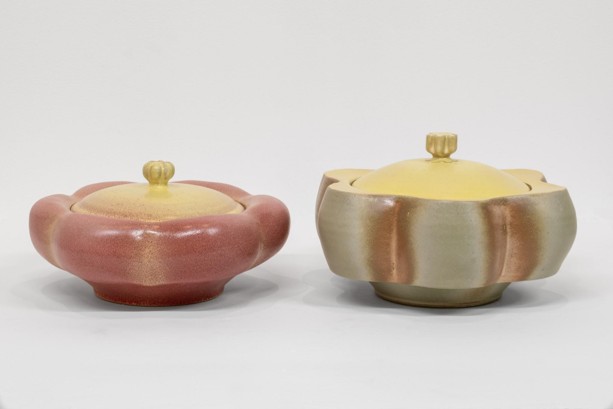
Double-walled, Lidded Serving Bowls
Stoneware, Glaze
32 x 14 x 9
$800
2025
click for more information
Ryan Greene
Double-walled, Lidded Serving BowlsStoneware, Glaze
32 x 14 x 9
800
2025
My work is rooted in the craftful uses of clay and the importance of utilitarian objects throughout history. I contemplate the interdependent nature of existing in this world and create pieces which connect to each other. This requires one to slow down as they unlock a lid, unstack a bowl, or twist a cup out of its holding place. These physical interactions drive my process with a focus on how the pieces function. A large part of my practice consists of formulating recipes and mixing dry materials to make clay bodies and glazes. I utilize wheel throwing, coil building, and slip casting techniques to create organic forms and multiples. I encourage people to interact with my work to connect with the pots, fill them with food and drink, and share moments together.
I am inspired by the Arts and Crafts Movement and intrigued with the duality of pottery to live a life of daily use or act as an element of design. Particularly, I question how ceramic objects made with a utilitarian purpose can blend in with decorative objects. I find similarities in how plants have many purposes beyond visual appeal, yet a highly manicured landscape can become quite sculptural. I connect functional pottery with fruiting and flowering plants to promoteS new ways of designing the landscapes around us. My work invites curiosity and physical interaction by offering surprises to those who dive deeper, and I encourage participants to carry this curiosity with them.
Marina Wahbeh | AAG/Arizona Clay Association Scholarship
Marina Wahbeh
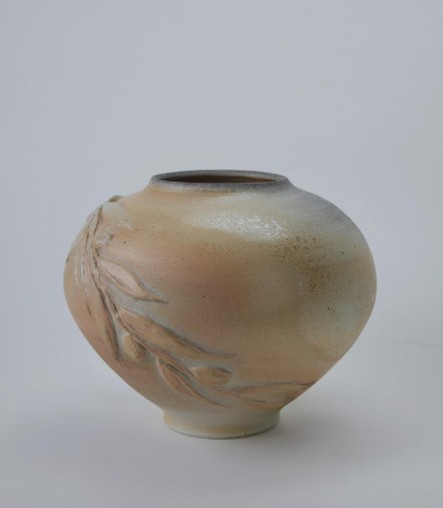
ZaytoonSoda-fired porcelain
6.5 x 7.5 x 7.5
130
2025
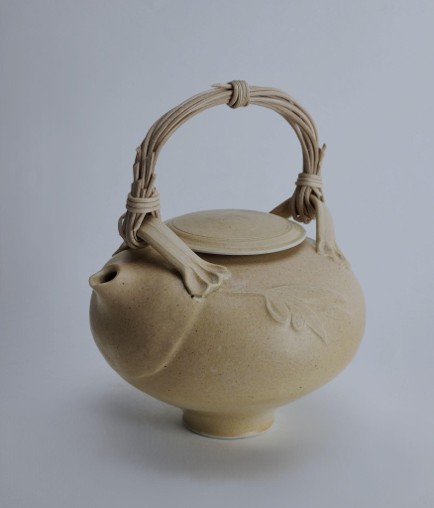
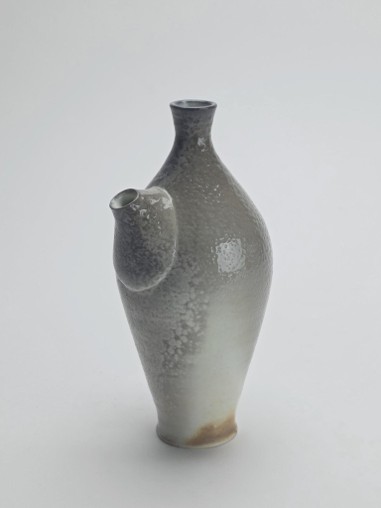
I’m interested in the relationship between form, atmosphere, and cultural identity. As a second-generation Palestinian-American artist, I find ceramics to be a meditative process of both control and surrender, mirroring resilience and fragility within cultural memory. I want to express Palestinian cultural endurance through minimal symbolism and functional forms inspired by traditional pots and brass-ware from the Levant region. I am drawn to atmospheric surfaces, achieved through reduction-cooled soda and wood-firings. I view the interaction of flame, soda, ash, and clay as a visual metaphor for Palestinian endurance, mirroring the unpredictable nature of life experienced by the Palestinian people. As the clay withstands intense heat to emerge strengthened, so too does cultural identity persist through generations of adversity.
The olive branch, a recurring motif in my pieces, stands as a testament to peace and perseverance. Universally recognized as an emblem of peace, olive branches hold cultural significance as a symbol of Palestinian identity and heritage. Olive trees illustrate the resilience of Palestine, with the roots of the tree understood as the people’s ties to the land, while the branches reflect the displacement endured by generations. I strive to combine this culturally significant imagery with an atmospheric surface, allowing the two finishes to complement one another. I am drawn towards forms such as teapots and serving vessels that intend to bring people together, inviting others to experience my culture through the pots I make. By combining atmospheric surfaces with minimal symbolic decoration, I aim to create works that express emotion through metaphor and visual symbolism. My practice is rooted in the values of community, family, perseverance, and self-reliance. Through functional ceramics, I hope to bring moments of connection through objects that invite use and reflection. While currently a BFA studio art candidate at Northern Arizona University, I hope to go on to pursue a Master’s of Fine Arts in ceramics, and a career in ceramic education to share my passion for the craft with others.
1/31/26 23:12
Marina Wahbeh
Reed Handle Teapot6 x 4.5 x 5
160
2025
I’m interested in the relationship between form, atmosphere, and cultural identity. As a second-generation Palestinian-American artist, I find ceramics to be a meditative process of both control and surrender, mirroring resilience and fragility within cultural memory. I want to express Palestinian cultural endurance through minimal symbolism and functional forms inspired by traditional pots and brass-ware from the Levant region. I am drawn to atmospheric surfaces, achieved through reduction-cooled soda and wood-firings. I view the interaction of flame, soda, ash, and clay as a visual metaphor for Palestinian endurance, mirroring the unpredictable nature of life experienced by the Palestinian people. As the clay withstands intense heat to emerge strengthened, so too does cultural identity persist through generations of adversity.
The olive branch, a recurring motif in my pieces, stands as a testament to peace and perseverance. Universally recognized as an emblem of peace, olive branches hold cultural significance as a symbol of Palestinian identity and heritage. Olive trees illustrate the resilience of Palestine, with the roots of the tree understood as the people’s ties to the land, while the branches reflect the displacement endured by generations. I strive to combine this culturally significant imagery with an atmospheric surface, allowing the two finishes to complement one another. I am drawn towards forms such as teapots and serving vessels that intend to bring people together, inviting others to experience my culture through the pots I make. By combining atmospheric surfaces with minimal symbolic decoration, I aim to create works that express emotion through metaphor and visual symbolism. My practice is rooted in the values of community, family, perseverance, and self-reliance. Through functional ceramics, I hope to bring moments of connection through objects that invite use and reflection. While currently a BFA studio art candidate at Northern Arizona University, I hope to go on to pursue a Master’s of Fine Arts in ceramics, and a career in ceramic education to share my passion for the craft with others.
1/31/26 23:12
Marina Wahbeh
Wood-Soda Fired EwerPorcelain
6.5 x 3.5 x 3
70
2025
I’m interested in the relationship between form, atmosphere, and cultural identity. As a second-generation Palestinian-American artist, I find ceramics to be a meditative process of both control and surrender, mirroring resilience and fragility within cultural memory. I want to express Palestinian cultural endurance through minimal symbolism and functional forms inspired by traditional pots and brass-ware from the Levant region. I am drawn to atmospheric surfaces, achieved through reduction-cooled soda and wood-firings. I view the interaction of flame, soda, ash, and clay as a visual metaphor for Palestinian endurance, mirroring the unpredictable nature of life experienced by the Palestinian people. As the clay withstands intense heat to emerge strengthened, so too does cultural identity persist through generations of adversity.
The olive branch, a recurring motif in my pieces, stands as a testament to peace and perseverance. Universally recognized as an emblem of peace, olive branches hold cultural significance as a symbol of Palestinian identity and heritage. Olive trees illustrate the resilience of Palestine, with the roots of the tree understood as the people’s ties to the land, while the branches reflect the displacement endured by generations. I strive to combine this culturally significant imagery with an atmospheric surface, allowing the two finishes to complement one another. I am drawn towards forms such as teapots and serving vessels that intend to bring people together, inviting others to experience my culture through the pots I make. By combining atmospheric surfaces with minimal symbolic decoration, I aim to create works that express emotion through metaphor and visual symbolism. My practice is rooted in the values of community, family, perseverance, and self-reliance. Through functional ceramics, I hope to bring moments of connection through objects that invite use and reflection. While currently a BFA studio art candidate at Northern Arizona University, I hope to go on to pursue a Master’s of Fine Arts in ceramics, and a career in ceramic education to share my passion for the craft with others.
1/31/26 23:12
Athena Solan Apodaca | AAG Scholarship
Athena Solan Apodaca
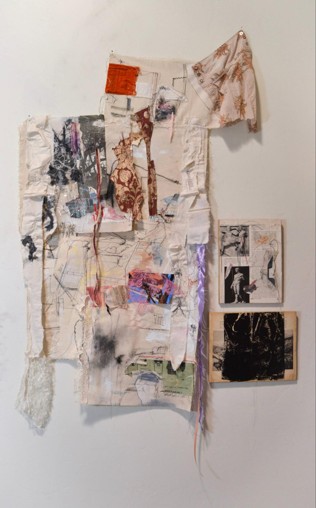
Primary Materials-Winnowing Coloniality
Canvas, fabric, graphite, colored pencil, thread, a single photograph, book pages, found materials, and magazine.
36.5 X 61 X 2
$4,000
2026
click for more information
Athena Solan Apodaca
Primary Materials-Winnowing ColonialityCanvas, fabric, graphite, colored pencil, thread, a single photograph, book pages, found materials, and magazine.
36.5 X 61 X 2
4,000
2026
I am currently enrolled at the University of Arizona School of Art. I’m working towards an MFA in Studio Art, with a focus in Interdisciplinary Practice. I also have a passion for exhibition design. This semester I accepted the Gallery Operations and Exhibition Production intern position at the Steinfeld Gallery and Studios. I’m working closely with our program chair to complete the Graduate Museum Studies Certificate program at the University of Arizona in conjunction with my MFA.
Through a process of anticonformity, my work maps social landscapes and psychological relationships. My research aligns with social and cognitive behavioral therapies, drawing from patterns of unlearning, undoing, and re-imprinting. I approach artmaking with non-traditional applications using a sewing machine and adding gestural drawing or rudimentary building techniques to construct fragmented landscapes of rumination. The work has a low carbon footprint, reflecting my compassionate desire for an equal distribution of resources and welfare. I often include domestically renewable materials that are sutured to worn artifacts, leaving tails of thread exposed as a reminder of the fragility we all experience.
Primary Materials-Winnowing Coloniality is a relief sculpture that was constructed using domestic and construction-based materials. Additionally, I incorporated sewn drawings, a photograph, lace, and vinyl coverings. This piece represents an urban environment developed from various psychological archetypes and the negative effects of colonization. Along the right are two plaques. One is a page from an art history book collaged with ephemera and dualistic imagery. The other is two book pages that were sewn together and covered with a monoprint, causing a type of erasure of historical content.
(Left) Re-Imprinting From the Sentient and Through the Laundry and (Right) Laundry. The Machines of Psychoarcheology is a diptych that includes two sewn paintings. They are worked and composed as finished pieces on both sides. For the purpose of this application, I am only submitting this one specific arrangement. I’m referencing an erasure by displaying the paintings in a way that restricts the viewer’s ability to see both sides of the surface. Understanding that there is more artwork that is unable to be seen, evokes a tension and connects the piece to our experience as humans in a social landscape. Our interactions are temporary and only a very small fraction of who we are can be expressed in a short window of time.
Re-Imprinting Home. From the Letter You Sent is a piece that maps important family relationships and social heritage. In the center, there is a transparent photograph that is sewn on top of a book page from turn of the century urban planning. The text is covered by a monoprint that I made from an intimate letter. The print only expresses a portion of the private letter and also acts as an erasure for the text in the urban planning book page. The photograph was taken in the historic district of the city I’m originally from. The rest of the sprawling city is reconstructed through drawings, worn fabrics, and dryer lint. Re-Imprinting Home. From the Letter You Sent calls us to consider the roles that are activated within the walls of a home and through family heritage.
After graduate school, I plan to continue my work as a professional artist, and work in a museum setting potentially curating and installing exhibitions. Additionally, my goal is to establish an artist residency program that acts as an incubator space allowing emerging artists to create, research, collaborate, and exhibit their art.
I am dedicated to continued growth as an artist and a communicator. I would be very grateful for this opportunity. Thank you for your consideration.
Athena Solan Apodaca
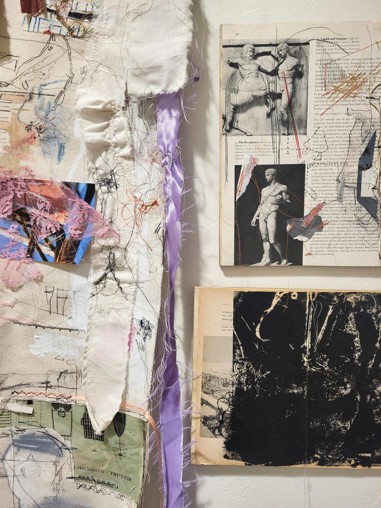
(Left) Re-Imprinting From the Sentient and Through the Laundry and (Right) Laundry. The Machines of Psychoarcheology
Fabric, acrylic, thread on unstretched canvas
55 X 40 X 1
$4,000
2025
click for more information
Athena Solan Apodaca
Left) Re-Imprinting From the Sentient and Through the Laundry and (Right) Laundry. The Machines of PsychoarcheologyFabric, acrylic, thread on unstretched canvas
55 X 40 X 1
4,000
2025
I am currently enrolled at the University of Arizona School of Art. I’m working towards an MFA in Studio Art, with a focus in Interdisciplinary Practice. I also have a passion for exhibition design. This semester I accepted the Gallery Operations and Exhibition Production intern position at the Steinfeld Gallery and Studios. I’m working closely with our program chair to complete the Graduate Museum Studies Certificate program at the University of Arizona in conjunction with my MFA.
Through a process of anticonformity, my work maps social landscapes and psychological relationships. My research aligns with social and cognitive behavioral therapies, drawing from patterns of unlearning, undoing, and re-imprinting. I approach artmaking with non-traditional applications using a sewing machine and adding gestural drawing or rudimentary building techniques to construct fragmented landscapes of rumination. The work has a low carbon footprint, reflecting my compassionate desire for an equal distribution of resources and welfare. I often include domestically renewable materials that are sutured to worn artifacts, leaving tails of thread exposed as a reminder of the fragility we all experience.
Primary Materials-Winnowing Coloniality is a relief sculpture that was constructed using domestic and construction-based materials. Additionally, I incorporated sewn drawings, a photograph, lace, and vinyl coverings. This piece represents an urban environment developed from various psychological archetypes and the negative effects of colonization. Along the right are two plaques. One is a page from an art history book collaged with ephemera and dualistic imagery. The other is two book pages that were sewn together and covered with a monoprint, causing a type of erasure of historical content.
(Left) Re-Imprinting From the Sentient and Through the Laundry and (Right) Laundry. The Machines of Psychoarcheology is a diptych that includes two sewn paintings. They are worked and composed as finished pieces on both sides. For the purpose of this application, I am only submitting this one specific arrangement. I’m referencing an erasure by displaying the paintings in a way that restricts the viewer’s ability to see both sides of the surface. Understanding that there is more artwork that is unable to be seen, evokes a tension and connects the piece to our experience as humans in a social landscape. Our interactions are temporary and only a very small fraction of who we are can be expressed in a short window of time.
Re-Imprinting Home. From the Letter You Sent is a piece that maps important family relationships and social heritage. In the center, there is a transparent photograph that is sewn on top of a book page from turn of the century urban planning. The text is covered by a monoprint that I made from an intimate letter. The print only expresses a portion of the private letter and also acts as an erasure for the text in the urban planning book page. The photograph was taken in the historic district of the city I’m originally from. The rest of the sprawling city is reconstructed through drawings, worn fabrics, and dryer lint. Re-Imprinting Home. From the Letter You Sent calls us to consider the roles that are activated within the walls of a home and through family heritage.
After graduate school, I plan to continue my work as a professional artist, and work in a museum setting potentially curating and installing exhibitions. Additionally, my goal is to establish an artist residency program that acts as an incubator space allowing emerging artists to create, research, collaborate, and exhibit their art.
I am dedicated to continued growth as an artist and a communicator. I would be very grateful for this opportunity. Thank you for your consideration.
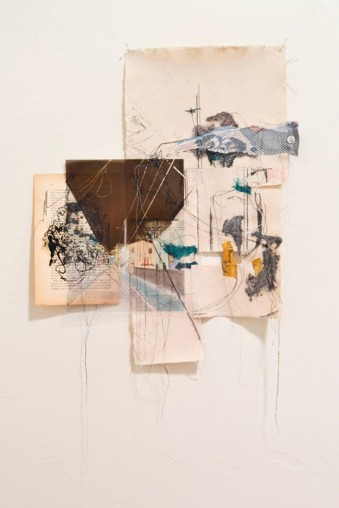
Athena Solan Apodaca
Re-Imprinting Home. From the Letter You Sent
Graphite, fabric, photo transparency, book page, and thread on unstretched canvas
18.5 X 30 X 1
$2,200
2025
click for more information
Athena Solan Apodaca
Re-Imprinting Home. From the Letter You SentGraphite, fabric, photo transparency, book page, and thread on unstretched canvas
18.5 X 30 X 1
2,200
2025
I am currently enrolled at the University of Arizona School of Art. I’m working towards an MFA in Studio Art, with a focus in Interdisciplinary Practice. I also have a passion for exhibition design. This semester I accepted the Gallery Operations and Exhibition Production intern position at the Steinfeld Gallery and Studios. I’m working closely with our program chair to complete the Graduate Museum Studies Certificate program at the University of Arizona in conjunction with my MFA.
Through a process of anticonformity, my work maps social landscapes and psychological relationships. My research aligns with social and cognitive behavioral therapies, drawing from patterns of unlearning, undoing, and re-imprinting. I approach artmaking with non-traditional applications using a sewing machine and adding gestural drawing or rudimentary building techniques to construct fragmented landscapes of rumination. The work has a low carbon footprint, reflecting my compassionate desire for an equal distribution of resources and welfare. I often include domestically renewable materials that are sutured to worn artifacts, leaving tails of thread exposed as a reminder of the fragility we all experience.
Primary Materials-Winnowing Coloniality is a relief sculpture that was constructed using domestic and construction-based materials. Additionally, I incorporated sewn drawings, a photograph, lace, and vinyl coverings. This piece represents an urban environment developed from various psychological archetypes and the negative effects of colonization. Along the right are two plaques. One is a page from an art history book collaged with ephemera and dualistic imagery. The other is two book pages that were sewn together and covered with a monoprint, causing a type of erasure of historical content.
(Left) Re-Imprinting From the Sentient and Through the Laundry and (Right) Laundry. The Machines of Psychoarcheology is a diptych that includes two sewn paintings. They are worked and composed as finished pieces on both sides. For the purpose of this application, I am only submitting this one specific arrangement. I’m referencing an erasure by displaying the paintings in a way that restricts the viewer’s ability to see both sides of the surface. Understanding that there is more artwork that is unable to be seen, evokes a tension and connects the piece to our experience as humans in a social landscape. Our interactions are temporary and only a very small fraction of who we are can be expressed in a short window of time.
Re-Imprinting Home. From the Letter You Sent is a piece that maps important family relationships and social heritage. In the center, there is a transparent photograph that is sewn on top of a book page from turn of the century urban planning. The text is covered by a monoprint that I made from an intimate letter. The print only expresses a portion of the private letter and also acts as an erasure for the text in the urban planning book page. The photograph was taken in the historic district of the city I’m originally from. The rest of the sprawling city is reconstructed through drawings, worn fabrics, and dryer lint. Re-Imprinting Home. From the Letter You Sent calls us to consider the roles that are activated within the walls of a home and through family heritage.
After graduate school, I plan to continue my work as a professional artist, and work in a museum setting potentially curating and installing exhibitions. Additionally, my goal is to establish an artist residency program that acts as an incubator space allowing emerging artists to create, research, collaborate, and exhibit their art.
I am dedicated to continued growth as an artist and a communicator. I would be very grateful for this opportunity. Thank you for your consideration.
Heather Weller | AAG Bleakney-Curran Scholarship
Heather Weller
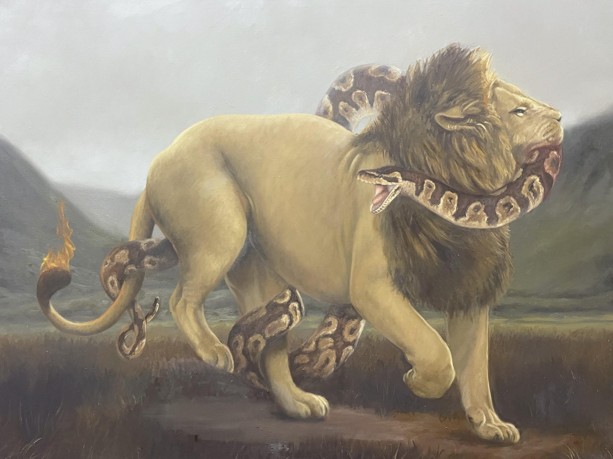
The Lion’s Share of Misfortune
Oil on Canvas
36 x 48 x 1
NFS
2025
click for more information
Heather Weller
The Lion’s Share of MisfortuneOil on Canvas
36 x 48 x 1
NFS
2025
With my latest body of work, I seek to capture internal and external suffering. Myth, legend, and fable teach lessons rooted in pain and grief that I find applicable to human suffering. I draw inspiration from these narratives to convey my own conflicts by reworking the classic tales to align with our contemporary understandings of mental health, grief and trauma.
The Lion’s Share of Misfortune, emerged from years of compounding tragedy. Through this painting, I processed the weight of an OCD diagnosis, rejection, and death that accumulated upon my lap. I transformed the Lion’s Share fable, a story of greed, into a tale of suffering. Animals appear frequently throughout my work not only because they populate the folklore and myth that inspire me, but because of their quiet endurance. Animals suffer in a silence that mirrors my own quiet approach to coping with life. My pain finds its home in the work that I make, acting as an effective vessel. As the work evolves, I intend to explore ways to imbue more of myself into my art and break away from complete silence. I intend for my paintings to resonate with viewers. I want people who experience hardship or turmoil associated with mental health to feel seen in the work. As a society, we do not talk enough about the raw realities of living with quiet disorders. I feel it is my responsibility to contribute to the conversations that raise awareness for mental health survivors.
Painting is my way of understanding concepts that are not so easily put into words. My work is based on an individual view concerning our shared existence as humans. I consider art as an opportunity to question preconceived perspectives of the world we live in to develop visual statements when words alone are not enough.
I am currently enrolled in the Masters of Fine Arts program at Arizona State University and it is my aspiration to establish myself as a working artist. I am fiercely dedicated to the work that I create. Often, I will devote hours to the craft, sacrificing time, money, and personal relationships for the sake of the work. My late father instilled in me the value of hard work and I strive to live up to that value both in and out of the studio. Dedication is what brought me to the MFA program and I know continuing my devotion to the work is what will help me fulfill my aspirations as I build a career as an artist.
Heather Weller
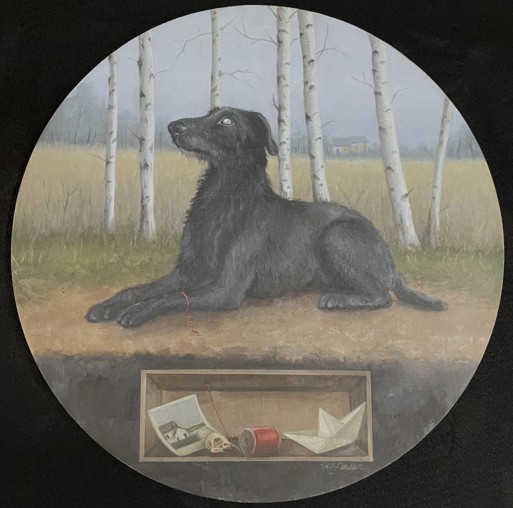
At Least The Black Dog Stayed
Oil on Pine Wood Round
24 x 24 x 2
NFS
2025
click for more information
Heather Weller
At Least The Black Dog StayedOil on Pine Wood Round
24 x 24 x 2
NFS
2025
With my latest body of work, I seek to capture internal and external suffering. Myth, legend, and fable teach lessons rooted in pain and grief that I find applicable to human suffering. I draw inspiration from these narratives to convey my own conflicts by reworking the classic tales to align with our contemporary understandings of mental health, grief and trauma.
The Lion’s Share of Misfortune, emerged from years of compounding tragedy. Through this painting, I processed the weight of an OCD diagnosis, rejection, and death that accumulated upon my lap. I transformed the Lion’s Share fable, a story of greed, into a tale of suffering. Animals appear frequently throughout my work not only because they populate the folklore and myth that inspire me, but because of their quiet endurance. Animals suffer in a silence that mirrors my own quiet approach to coping with life. My pain finds its home in the work that I make, acting as an effective vessel. As the work evolves, I intend to explore ways to imbue more of myself into my art and break away from complete silence. I intend for my paintings to resonate with viewers. I want people who experience hardship or turmoil associated with mental health to feel seen in the work. As a society, we do not talk enough about the raw realities of living with quiet disorders. I feel it is my responsibility to contribute to the conversations that raise awareness for mental health survivors.
Painting is my way of understanding concepts that are not so easily put into words. My work is based on an individual view concerning our shared existence as humans. I consider art as an opportunity to question preconceived perspectives of the world we live in to develop visual statements when words alone are not enough.
I am currently enrolled in the Masters of Fine Arts program at Arizona State University and it is my aspiration to establish myself as a working artist. I am fiercely dedicated to the work that I create. Often, I will devote hours to the craft, sacrificing time, money, and personal relationships for the sake of the work. My late father instilled in me the value of hard work and I strive to live up to that value both in and out of the studio. Dedication is what brought me to the MFA program and I know continuing my devotion to the work is what will help me fulfill my aspirations as I build a career as an artist.
Heather Weller
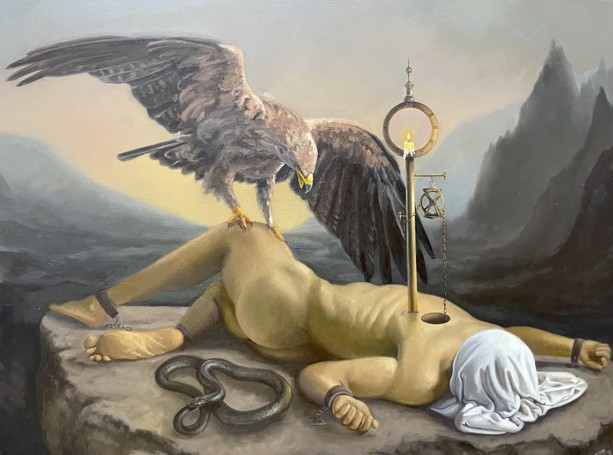
Is This Forever?Oil on Canvas
36 x 48 x 1
NFS
2024
With my latest body of work, I seek to capture internal and external suffering. Myth, legend, and fable teach lessons rooted in pain and grief that I find applicable to human suffering. I draw inspiration from these narratives to convey my own conflicts by reworking the classic tales to align with our contemporary understandings of mental health, grief and trauma.
The Lion’s Share of Misfortune, emerged from years of compounding tragedy. Through this painting, I processed the weight of an OCD diagnosis, rejection, and death that accumulated upon my lap. I transformed the Lion’s Share fable, a story of greed, into a tale of suffering. Animals appear frequently throughout my work not only because they populate the folklore and myth that inspire me, but because of their quiet endurance. Animals suffer in a silence that mirrors my own quiet approach to coping with life. My pain finds its home in the work that I make, acting as an effective vessel. As the work evolves, I intend to explore ways to imbue more of myself into my art and break away from complete silence. I intend for my paintings to resonate with viewers. I want people who experience hardship or turmoil associated with mental health to feel seen in the work. As a society, we do not talk enough about the raw realities of living with quiet disorders. I feel it is my responsibility to contribute to the conversations that raise awareness for mental health survivors.
Painting is my way of understanding concepts that are not so easily put into words. My work is based on an individual view concerning our shared existence as humans. I consider art as an opportunity to question preconceived perspectives of the world we live in to develop visual statements when words alone are not enough.
I am currently enrolled in the Masters of Fine Arts program at Arizona State University and it is my aspiration to establish myself as a working artist. I am fiercely dedicated to the work that I create. Often, I will devote hours to the craft, sacrificing time, money, and personal relationships for the sake of the work. My late father instilled in me the value of hard work and I strive to live up to that value both in and out of the studio. Dedication is what brought me to the MFA program and I know continuing my devotion to the work is what will help me fulfill my aspirations as I build a career as an artist.
Beihua Guo | AAG Marigold Linton Scholarship
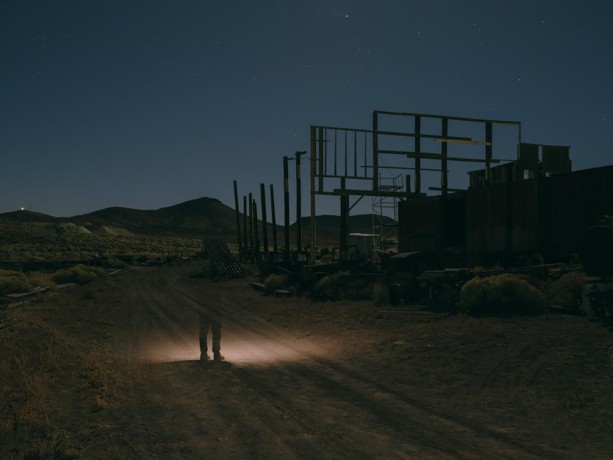
Beihua Guo
Goldfield, Nevadainkjet print
22 x 30 x 1
1000
2025
My work investigates how histories are remembered, buried, or erased, particularly in landscapes marked by colonialism, extraction, and displacement. Through photography, video, and installation, I explore how the visible world often hides deeper absences, and how power and memory shape what is seen and what is forgotten.
On May 10, 1869, “−·· −−− −· ·” (DONE) was telegraphed across the nation to signal the completion of the First Transcontinental Railroad. That moment was immortalized in Andrew J. Russell’s photograph East and West Shaking Hands at Laying Last Rail. Yet despite constituting nearly 90% of the workforce in the Sierra Nevada, Chinese laborers are effectively absent from this definitive image. Stanford researchers have identified only two: one turned away from the camera, the other obscured by a raised hat.
In response, I insert my own body into these landscapes through blurred self-portraits. I return to sites burdened by histories of erasure: the Transcontinental lines, the ruins of Chinatowns and mines, and borderlands. By adopting the visual language of the ghost, I insist that the land remains haunted by those who built it.
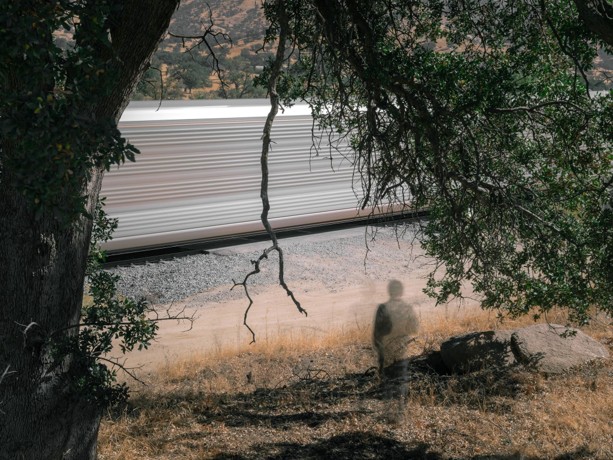
Beihua Guo
Tehachapi Loop, Walong, California
inkjet print
22 x 30 x 1
$1000
2024
click for more information
Beihua Guo
Tehachapi Loop, Walong, Californiainkjet print
22 x 30 x 1
1000
2024
My work investigates how histories are remembered, buried, or erased, particularly in landscapes marked by colonialism, extraction, and displacement. Through photography, video, and installation, I explore how the visible world often hides deeper absences, and how power and memory shape what is seen and what is forgotten.
On May 10, 1869, “−·· −−− −· ·” (DONE) was telegraphed across the nation to signal the completion of the First Transcontinental Railroad. That moment was immortalized in Andrew J. Russell’s photograph East and West Shaking Hands at Laying Last Rail. Yet despite constituting nearly 90% of the workforce in the Sierra Nevada, Chinese laborers are effectively absent from this definitive image. Stanford researchers have identified only two: one turned away from the camera, the other obscured by a raised hat.
In response, I insert my own body into these landscapes through blurred self-portraits. I return to sites burdened by histories of erasure: the Transcontinental lines, the ruins of Chinatowns and mines, and borderlands. By adopting the visual language of the ghost, I insist that the land remains haunted by those who built it.
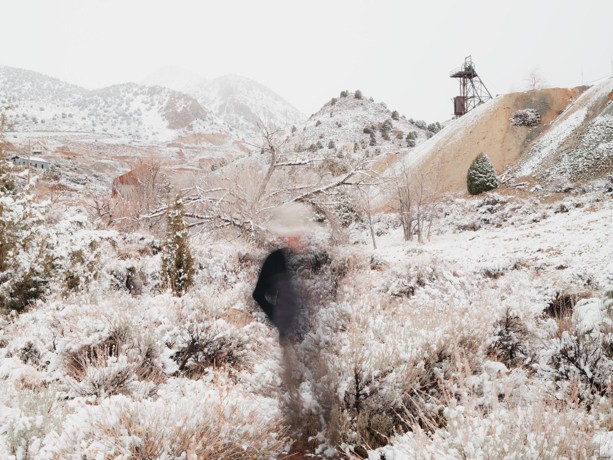
Beihua Guo
Silver City, Nevadainkjet print
22 x 30 x 1
1000
2025
My work investigates how histories are remembered, buried, or erased, particularly in landscapes marked by colonialism, extraction, and displacement. Through photography, video, and installation, I explore how the visible world often hides deeper absences, and how power and memory shape what is seen and what is forgotten.
On May 10, 1869, “−·· −−− −· ·” (DONE) was telegraphed across the nation to signal the completion of the First Transcontinental Railroad. That moment was immortalized in Andrew J. Russell’s photograph East and West Shaking Hands at Laying Last Rail. Yet despite constituting nearly 90% of the workforce in the Sierra Nevada, Chinese laborers are effectively absent from this definitive image. Stanford researchers have identified only two: one turned away from the camera, the other obscured by a raised hat.
In response, I insert my own body into these landscapes through blurred self-portraits. I return to sites burdened by histories of erasure: the Transcontinental lines, the ruins of Chinatowns and mines, and borderlands. By adopting the visual language of the ghost, I insist that the land remains haunted by those who built it.
Jaime Schmidt | AAG/Arizona Watercolor Assoc Del Cecil Scholarship
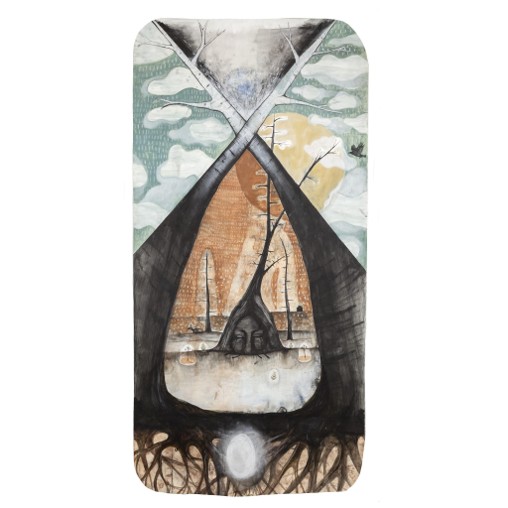
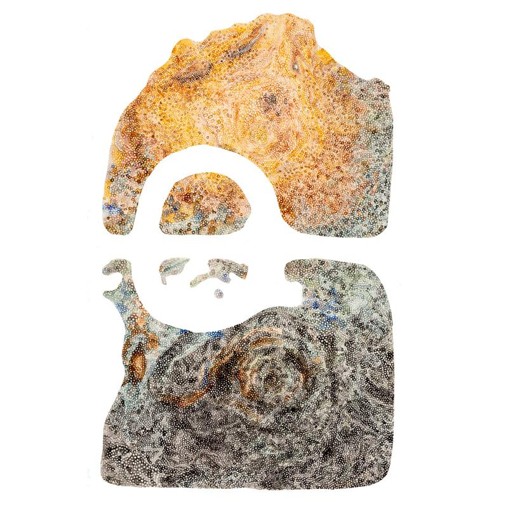
Jaime Schmidt
Grief and Regeneration
Ink and watercolor crafted from minerals, plants, fungi, and carbon on cotton paper
35.75 x72
$1100
2022
click for more information
Jaime Schmidt
Grief and RegenerationInk and watercolor crafted from minerals, plants, fungi, and carbon on cotton paper
35.75 x72
1100
2022
My work as an interdisciplinary artist explores transformation, ritual, and ecological interconnectedness. Through installations, performance, and collaborative community projects, I engage with the emotional and spiritual dimensions of environmental stewardship and collective healing. My practice emerges from lived experiences with complex PTSD and a commitment to personal and communal restoration. I create spaces for re-embodiment and emotional processing, often using reclaimed materials and site-specific elements to honor place-based wisdom.
Jaime Schmidt
Study of Liminal Light
Pigments crafted with plants, minerals, and fungi on paper
22 x 30
$1777
2024
click for more information
Jaime Schmidt
Study of Liminal LightPigments crafted with plants, minerals, and fungi on paper
22 x 30
1777
2024
My work as an interdisciplinary artist explores transformation, ritual, and ecological interconnectedness. Through installations, performance, and collaborative community projects, I engage with the emotional and spiritual dimensions of environmental stewardship and collective healing. My practice emerges from lived experiences with complex PTSD and a commitment to personal and communal restoration. I create spaces for re-embodiment and emotional processing, often using reclaimed materials and site-specific elements to honor place-based wisdom.
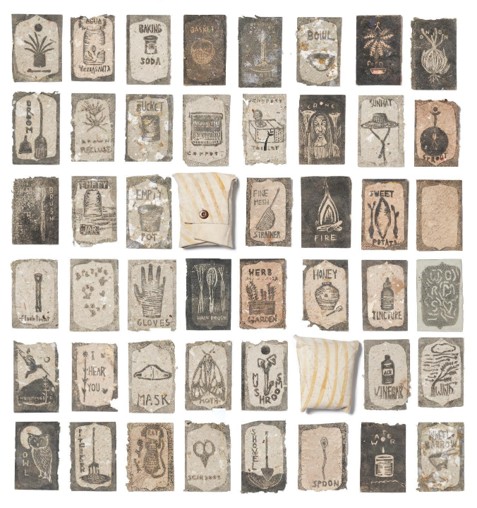
Jaime Schmidt
House Oracle
Woodblock printed, ink crafted from wildfire charcoal, handmade paper: recycled waste & plant fiber
6.5 x 4.5 x 2.75
$950
$2022
click for more information
Jaime Schmidt
House OracleWoodblock printed, ink crafted from wildfire charcoal, handmade paper: recycled waste & plant fiber
6.5 x 4.5 x 2.75
950
2022
My work as an interdisciplinary artist explores transformation, ritual, and ecological interconnectedness. Through installations, performance, and collaborative community projects, I engage with the emotional and spiritual dimensions of environmental stewardship and collective healing. My practice emerges from lived experiences with complex PTSD and a commitment to personal and communal restoration. I create spaces for re-embodiment and emotional processing, often using reclaimed materials and site-specific elements to honor place-based wisdom.
Negar Nazari | AAG/Arizona Watercolor Assoc Gayla Bonnell Scholarship
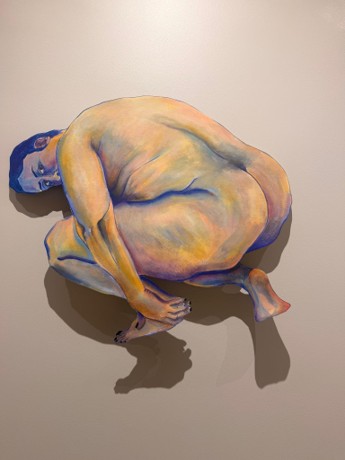
Negar Nazari
Nothing To Declare
Gouache , chalk Pastel
16 x 18
$1500
2025-26
click for more information
Negar Nazari
Nothing To DeclareGouache , chalk Pastel
16 x 18
$1500
2025-26
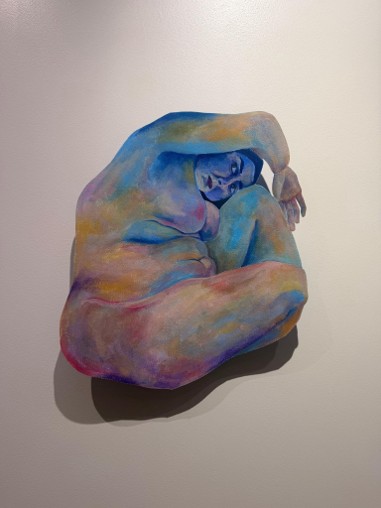
My current practice emerges from an imagined act of self-smuggling: placing my own body inside a suitcase and sending it back to Iran. This fictional gesture became the conceptual foundation for a series of paintings depicting my body in various states of compression and concealment. In the initial works, the figure appears folded, restrained, and attempting to disappear. Gradually, across the series, the body becomes more visible, more upright, and eventually meets the viewer’s gaze.
The viewer is invited to witness this transformation, not as a passive observer, but as a participant in the unfolding experience. The act of looking becomes part of the work itself, positioning the audience within the artist’s lived reality of displacement, surveillance, and self-erasure.
These painted figures are installed on the wall in a way that allows their shadows to extend and distort the bodies. The shadows function as an alternative form of presence: a second body that continues to exist independently, revealing what the figure attempts to hide. This shadow-creature evolves, changes shape, and suggests a life beyond the physical body, a hybrid form shaped by memory, migration, and political constraint.
The project is expanding into an animation that activates these shadows, allowing them to move from one figure to another and develop their own narrative. Through this transformation, the shadows become carriers of continuity, shifting from static trace to living memory.
In parallel, I have created a short animation exploring the body as a container of memory, treating physical form as an archive, and everyday objects as vessels capable of holding emotional and historical weight. Across these works, I investigate how identity survives fragmentation, how presence persists in absence, and how the body becomes both evidence and metaphor under conditions of displacement.
Ultimately, my practice seeks to translate personal experience into shared perception, inviting viewers to inhabit a moment of vulnerability, witnessing the slow emergence of a body that refuses to remain hidden.
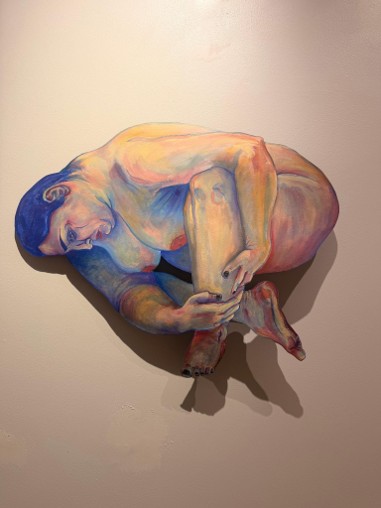
Negar Nazari
SheddingGouache, Chalk Pastel
25 x 20
$1500
2025-26
My current practice emerges from an imagined act of self-smuggling: placing my own body inside a suitcase and sending it back to Iran. This fictional gesture became the conceptual foundation for a series of paintings depicting my body in various states of compression and concealment. In the initial works, the figure appears folded, restrained, and attempting to disappear. Gradually, across the series, the body becomes more visible, more upright, and eventually meets the viewer’s gaze.
The viewer is invited to witness this transformation, not as a passive observer, but as a participant in the unfolding experience. The act of looking becomes part of the work itself, positioning the audience within the artist’s lived reality of displacement, surveillance, and self-erasure.
These painted figures are installed on the wall in a way that allows their shadows to extend and distort the bodies. The shadows function as an alternative form of presence: a second body that continues to exist independently, revealing what the figure attempts to hide. This shadow-creature evolves, changes shape, and suggests a life beyond the physical body, a hybrid form shaped by memory, migration, and political constraint.
The project is expanding into an animation that activates these shadows, allowing them to move from one figure to another and develop their own narrative. Through this transformation, the shadows become carriers of continuity, shifting from static trace to living memory.
In parallel, I have created a short animation exploring the body as a container of memory, treating physical form as an archive, and everyday objects as vessels capable of holding emotional and historical weight. Across these works, I investigate how identity survives fragmentation, how presence persists in absence, and how the body becomes both evidence and metaphor under conditions of displacement.
Ultimately, my practice seeks to translate personal experience into shared perception, inviting viewers to inhabit a moment of vulnerability, witnessing the slow emergence of a body that refuses to remain hidden.
Negar Nazari
WitnessGouache, Chalk Pastel
25 x 20
$1800
2025-26
My current practice emerges from an imagined act of self-smuggling: placing my own body inside a suitcase and sending it back to Iran. This fictional gesture became the conceptual foundation for a series of paintings depicting my body in various states of compression and concealment. In the initial works, the figure appears folded, restrained, and attempting to disappear. Gradually, across the series, the body becomes more visible, more upright, and eventually meets the viewer’s gaze.
The viewer is invited to witness this transformation, not as a passive observer, but as a participant in the unfolding experience. The act of looking becomes part of the work itself, positioning the audience within the artist’s lived reality of displacement, surveillance, and self-erasure.
These painted figures are installed on the wall in a way that allows their shadows to extend and distort the bodies. The shadows function as an alternative form of presence: a second body that continues to exist independently, revealing what the figure attempts to hide. This shadow-creature evolves, changes shape, and suggests a life beyond the physical body, a hybrid form shaped by memory, migration, and political constraint.
The project is expanding into an animation that activates these shadows, allowing them to move from one figure to another and develop their own narrative. Through this transformation, the shadows become carriers of continuity, shifting from static trace to living memory.
In parallel, I have created a short animation exploring the body as a container of memory, treating physical form as an archive, and everyday objects as vessels capable of holding emotional and historical weight. Across these works, I investigate how identity survives fragmentation, how presence persists in absence, and how the body becomes both evidence and metaphor under conditions of displacement.
Ultimately, my practice seeks to translate personal experience into shared perception, inviting viewers to inhabit a moment of vulnerability, witnessing the slow emergence of a body that refuses to remain hidden.
Allie Thurgood | AAG Scholarship
Allie Thurgood
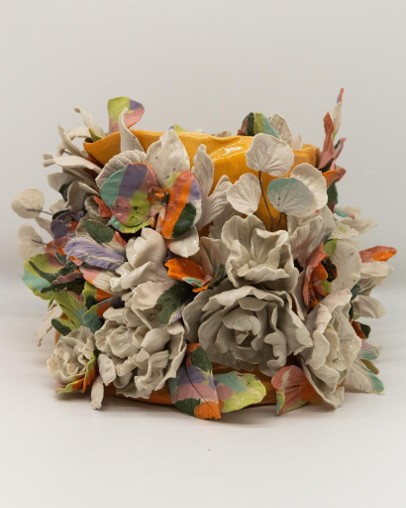
Seasonal Affection
Stoneware, porcelain, wire
9 x 12 x 7.5
NFS
2025
click for more information
Allie Thurgood
Seasonal Affection
Stoneware, porcelain, wire
9 x 12 x 7.5
NFS
2025
My work uses bags as a framework to examine human habits, patterns of consumption, and the quiet interactions that shape everyday life. Bags are objects we depend on constantly, whether we use them to carry, store, protect, or discard, yet they are rarely given personal or emotional value. They move through our hands and environments almost invisibly, becoming extensions of our routines rather than objects of consideration. By recreating these forms in ceramic and textiles, I slow them down and ask viewers to reflect on their role in our shared experience.
I am drawn to bags as they exist at the intersection of necessity and disposability. They mark movements of exchange, such as grocery shopping, gift-giving, travel, celebration, and convenience. Whether paper, plastic, or reusable, bags are tied to systems of abundance, excess, and expectation. Through my work, I explore how these objects reveal collective behaviors: overconsumption, ritualized generosity, hoarding, and reliance, while remaining deeply familiar and accessible.
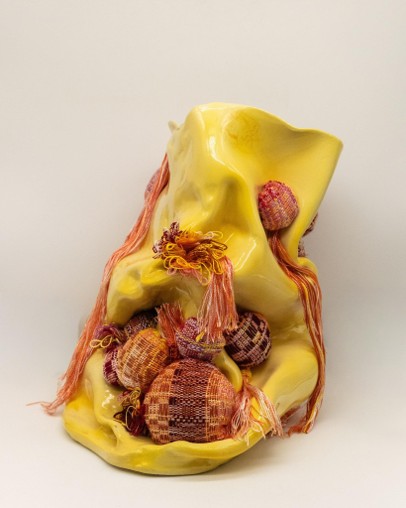
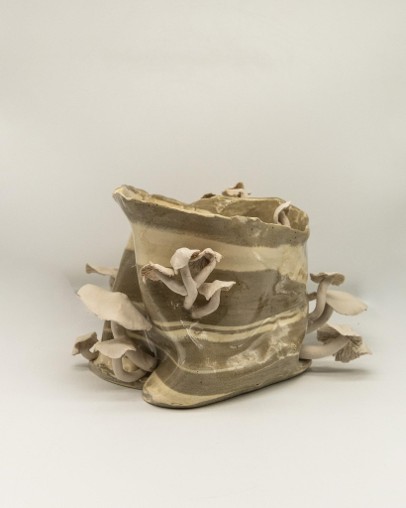
Materially, I combine clay and textile with surface embellishment, texture, and form to echo the folds, weight, and vulnerability of these objects. Botanical elements, woven surfaces, and exaggerated fullness reference the human body and the ways we adorn, protect, and burden ourselves. Flowers, textiles, and layered forms act as visual metaphors for value. They depict how something ordinary can be elevated, obscured, or overwhelmed depending on context.
By transforming overlooked, low-value objects into labor-intensive ceramic and textile sculptures, I aim to shift bags from disposable tools into avenues of reflection and communal meaning. These works invite viewers to consider what we carry, why we carry it, and how much of our identity and behavior is embedded in the objects that we move through the world with every day. My practice ultimately asks us to reconsider the ordinary, not as background noise, but as a mirror of who we are and how we live together.
Allie Thurgood
Overripe
Stoneware, hand-dyed tencel
8.5 x 12 x 11
NFS
2025
click for more information
Allie Thurgood
Overripe
Stoneware, hand-dyed tencel
8.5 x 12 x 11
NFS
2025
My work uses bags as a framework to examine human habits, patterns of consumption, and the quiet interactions that shape everyday life. Bags are objects we depend on constantly, whether we use them to carry, store, protect, or discard, yet they are rarely given personal or emotional value. They move through our hands and environments almost invisibly, becoming extensions of our routines rather than objects of consideration. By recreating these forms in ceramic and textiles, I slow them down and ask viewers to reflect on their role in our shared experience.
I am drawn to bags as they exist at the intersection of necessity and disposability. They mark movements of exchange, such as grocery shopping, gift-giving, travel, celebration, and convenience. Whether paper, plastic, or reusable, bags are tied to systems of abundance, excess, and expectation. Through my work, I explore how these objects reveal collective behaviors: overconsumption, ritualized generosity, hoarding, and reliance, while remaining deeply familiar and accessible.
Materially, I combine clay and textile with surface embellishment, texture, and form to echo the folds, weight, and vulnerability of these objects. Botanical elements, woven surfaces, and exaggerated fullness reference the human body and the ways we adorn, protect, and burden ourselves. Flowers, textiles, and layered forms act as visual metaphors for value. They depict how something ordinary can be elevated, obscured, or overwhelmed depending on context.
By transforming overlooked, low-value objects into labor-intensive ceramic and textile sculptures, I aim to shift bags from disposable tools into avenues of reflection and communal meaning. These works invite viewers to consider what we carry, why we carry it, and how much of our identity and behavior is embedded in the objects that we move through the world with every day. My practice ultimately asks us to reconsider the ordinary, not as background noise, but as a mirror of who we are and how we live together.
Allie Thurgood
Things That Take Root
Stoneware, porcelain
7.5 x 11 x 12.5
NFS
2025
click for more information
Allie Thurgood
Things That Take Root
Stoneware, porcelain
7.5 x 11 x 12.5
NFS
2025
My work uses bags as a framework to examine human habits, patterns of consumption, and the quiet interactions that shape everyday life. Bags are objects we depend on constantly, whether we use them to carry, store, protect, or discard, yet they are rarely given personal or emotional value. They move through our hands and environments almost invisibly, becoming extensions of our routines rather than objects of consideration. By recreating these forms in ceramic and textiles, I slow them down and ask viewers to reflect on their role in our shared experience.
I am drawn to bags as they exist at the intersection of necessity and disposability. They mark movements of exchange, such as grocery shopping, gift-giving, travel, celebration, and convenience. Whether paper, plastic, or reusable, bags are tied to systems of abundance, excess, and expectation. Through my work, I explore how these objects reveal collective behaviors: overconsumption, ritualized generosity, hoarding, and reliance, while remaining deeply familiar and accessible.
Materially, I combine clay and textile with surface embellishment, texture, and form to echo the folds, weight, and vulnerability of these objects. Botanical elements, woven surfaces, and exaggerated fullness reference the human body and the ways we adorn, protect, and burden ourselves. Flowers, textiles, and layered forms act as visual metaphors for value. They depict how something ordinary can be elevated, obscured, or overwhelmed depending on context.
By transforming overlooked, low-value objects into labor-intensive ceramic and textile sculptures, I aim to shift bags from disposable tools into avenues of reflection and communal meaning. These works invite viewers to consider what we carry, why we carry it, and how much of our identity and behavior is embedded in the objects that we move through the world with every day. My practice ultimately asks us to reconsider the ordinary, not as background noise, but as a mirror of who we are and how we live together.